
With the rise of international transport in the 1870s, it has become a trend to import foreign objects to the home including animals like the grey squirrels. It was initially introduced in the UK by wealthy individuals by importing grey squirrels from America to people’s estate in England as this was considered very fashionable at the time. Little did they know how these foreign organisms would negatively impact the native species in Britain.
Traits why grey squirrels are invasive towards red squirrels
Since the arrival of grey squirrels in Britain it has been invasive towards the native red squirrels which caused the decrease of their population.
Feeding
Competition to food is a factor that causes the decrease in population of red squirrels. As both squirrels are omnivores with the same diet, both will be looking for the same food to eat. Being able to digest tannin provides the squirrels more advantageous nutrients such as fat and proteins which can encourage them to store more fat.
Larger physique
Due to their larger physique to the red squirrels, they are capable of storing 4 times more fat which is necessary to be able to survive harsher conditions such as the winter seasons. There larger size requires them to naturally eat more than the red squirrels, especially if they want to maintain the storing of fat over the harsh seasons.
Epidemic spread
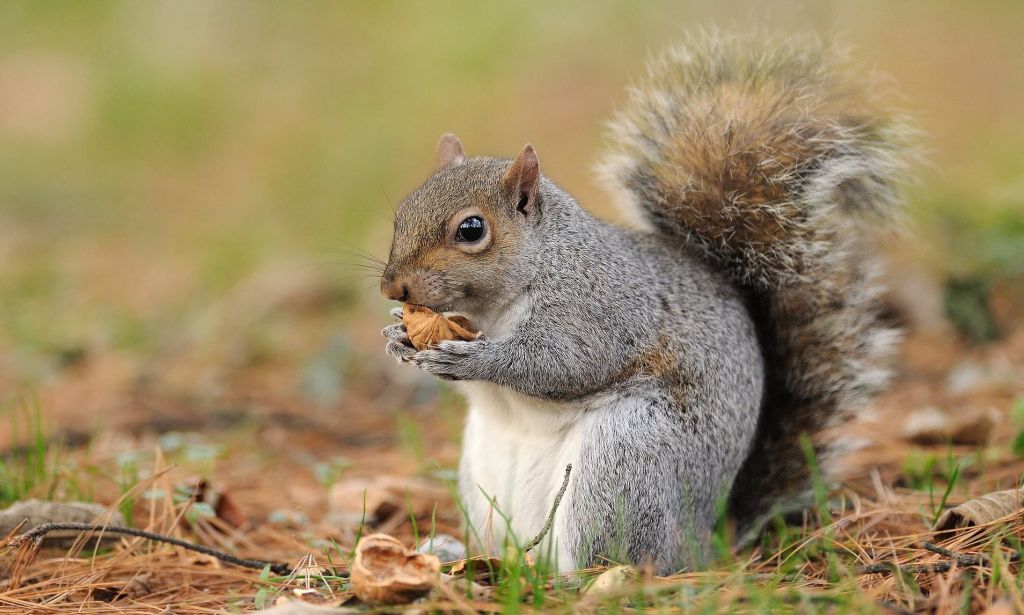
When the grey squirrel was imported from America to Britain, it did not just introduce the invasive rodent, but it has also introduced a virus that potentially wipe a whole population. Grey squirrels carry a virus called Squirrel pox in which the red squirrels are very vulnerable by. When a red squirrel is infected either from physical contact or sharing food, the red squirrel surfers to a slow painful death starting with the symptoms of tumours, ulcers and lesions forming around the eyes and mouth which causes them blind and unable to eat and drink which then leads to death of starvation and dehydration. Despite the grey squirrels being the carriers of this virus, it does not affect them as they have genetically adapted to become immune to the virus due to their long exposure to the virus for many years.
Conservation efforts and help from the natural terrain have saved the grey squirrels.
There are still some areas in the British Isles where red squirrels are still present, examples of these are Scotland, Isle of Anglesey and Isle of Wight, this is due to lad restrictions preventing the migration such as mountains and bodies of water
Conservation efforts are also responsible for these remaining squirrels as they are protected by laws and regulations. Some conservation efforts that protect red squirrels from extinction are:
- The eradication of grey squirrels in the Isle of Anglesey followed by the reintroduction of red squirrels the Newborough forest.
- The save our squirrels campaign is a set of grey squirrel control measures set out in national trust areas.
- The North East Scotland Biodiversity Partnership is a plan put into place in Scotland and north England with the aim to protect red squirrels.
Reflection
This lecture was carried out by a 3rd year conservation student had made me realised, actions we do for luxury or economic growth could cause such a huge impact else where in this case the near extinction of red squirrels, as the introduction of grey squirrels started at around the late 1800s, its more forgivable due to the lack of education back in the day and was not brought to the uk to intentionally wipe out the red squirrel. The consequences was unexpected at the time. Now that we are more aware about invasive species we are more careful and educated when transporting foreign species to new habitats.
This lecture hasn’t helped me much about what career path to choose but it made me realise, we make dumb mistakes during uncharted territories in our lives and we need to be able to evaluate and learn from our mistakes in order to improve ourselves though out life.
 The Curious Biologist