Work Experience in the Histopathology Lab at Birmingham Children’s Hospital
Histopathology is the microscopic examination of tissues in order to identify diseases.
Home in summer of 2019 with not a single holiday booked, through the hard effort of emails, I had the opportunity to work under supervision in lab departments in Birmingham Children’s Hospital, and one of them being in the histopathology lab where I have held human organs and look at them close under the microscope.
Entering the Lab I was greeted politely by the team which was all wearing lab lab coats. I was advised to wear lab coats at all times to be part of the gang. I’m already used to since I started any lab work.
Safety and hygiene always comes first in the lab.
The whole process was fairly straight forward. During a patient’s surgery or autopsy a specimen is cut away from the problematic organ (in this case an ovarian tumor) and is stored within a sealed container along with a fixative called formalin, this preserves the tissue and prevents it from decaying during transport. This specimen always comes with a paper slip stating details such as:
- Patient Name and date of birth
- NHS Number
- Organ the specimen it came from
- Time of specimen extraction
- Doctor
- Delivery details To and From
Specimen transported to the histopathology lab via the hospital’s pneumatic tube system. Where objects can be easily passed around the hospital quickly in capsules by only entering a destination code. This is very handy in times of emergency like when a biopsy or blood tests is needed to be done as soon as possible.
When the specimen is received by the lab, it undergoes embedding process where the specimen is contained in a processing cassette where it is then placed in a Tissue Processor machine where dehydration and the infiltration of a paraffin wax. This can take several hours to over night depending on the size of the specimen.
The wax specimen is placed in a block of molten wax, when solidifies we ended up with a cube of wax containing the specimen at the centre.
The block is now ready to be sectioned, this is like slicing thin layers of onions but instead we would be looking under a microscope slicing 10 µm layers. This is the stage that requires the most precision. Perfect sections are then placed on slides.
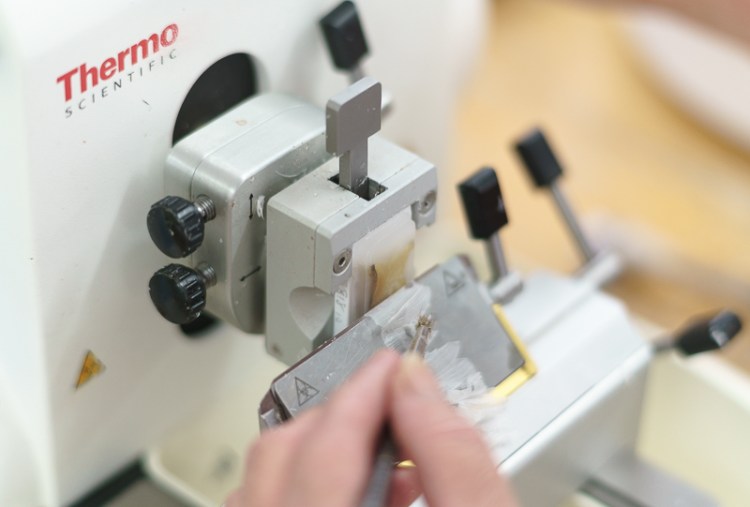
To see the structure of the specimen clearly, the slides are stained several times
- H&E Hematoxylin and Eosin
- Carmine
- Silver Nitrate
- Gram stain
- Romanowsky Stain
- Trichrome stain
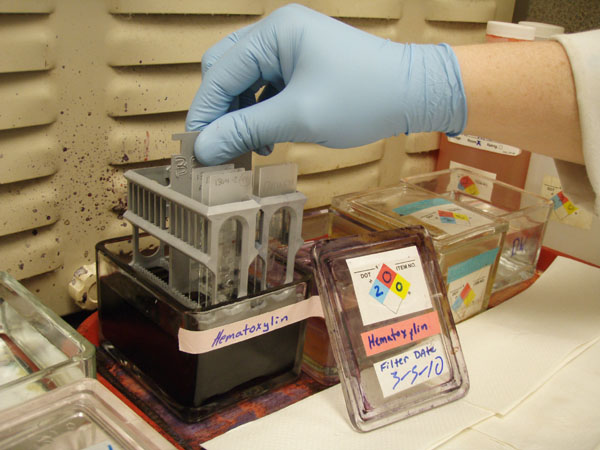
Slides are rinsed in distilled water between stains.
Coverslip is then placed above the specimens making it ready to be seen under a microscope!
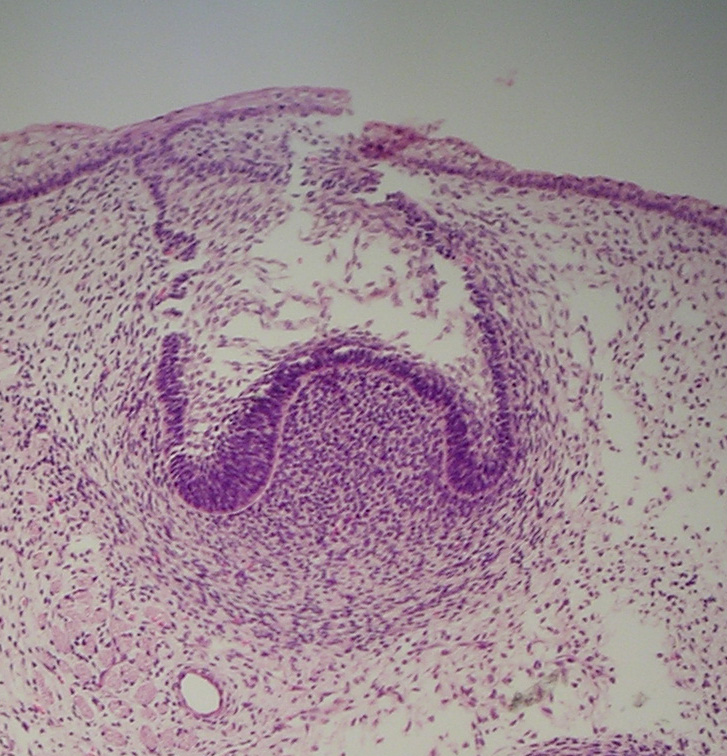
Its gross but fascinating!
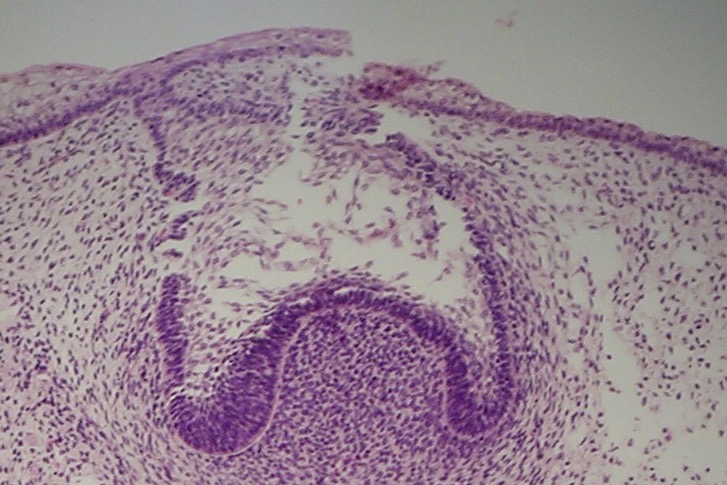
We could see remnants of stem cells gradually developing into dental pulp cells! We even found actual teeth structure starting to grow.
Reflection
I have really enjoyed my week experience in a histopathology lab, the staff has been very friendly. “Enjoyed my company” they said. Seeing human organs and stuff that grows or happens to them still fascinates me. Analysing the daily workflow in the lab, despite its simplicity, its is still a great responsibility. Producing hundreds of slides a day equals to hundreds of paitents meaning one mistake examining the specimen could cause miss diagnosis and can potentially risk a persons life. Which is normal for any person who just started working in the hospital. They said, doing this for years and help from colleagues made them confident enough not to make mistakes. However I could see myself getting bored of this workflow over time.
Talking to the colleagues in the lab about the steps and requirements to work full time, they mentioned my degree should be IBMS, as I my degree does not have this, I would have to switch courses to Medical science. Choosing this path would mean I have to stay in university for another 3 years. They’ve also mentioned the starting at Band 4 with a salary of £15,000 per year.
Considering I would have to restart university again and work on the side to pay for my tuition fees and repetitively working inside a lab I think would get boring over time so in my opinion £15,000 starting salary is simply wont be the best path for me at this moment.
Details and Contacts
Birmingham Children’s Hospital
Steelhouse Lane
Birmingham
B4 6NH
susan.cavanagh@nhs.net
yvette.taylor2@nhs.net
Sarah.clinton9@nhs.net
0121 333 9952
 The Curious Biologist